Shutter Speed in Film Photography
Introduction
Shutter speed in film photography refers to the length of time the camera's shutter remains open, exposing the film to light. It's a critical element of exposure control and creative expression, determining both the brightness of the image and how motion is rendered. Unlike digital cameras, many film cameras have mechanical shutters with distinct characteristics.
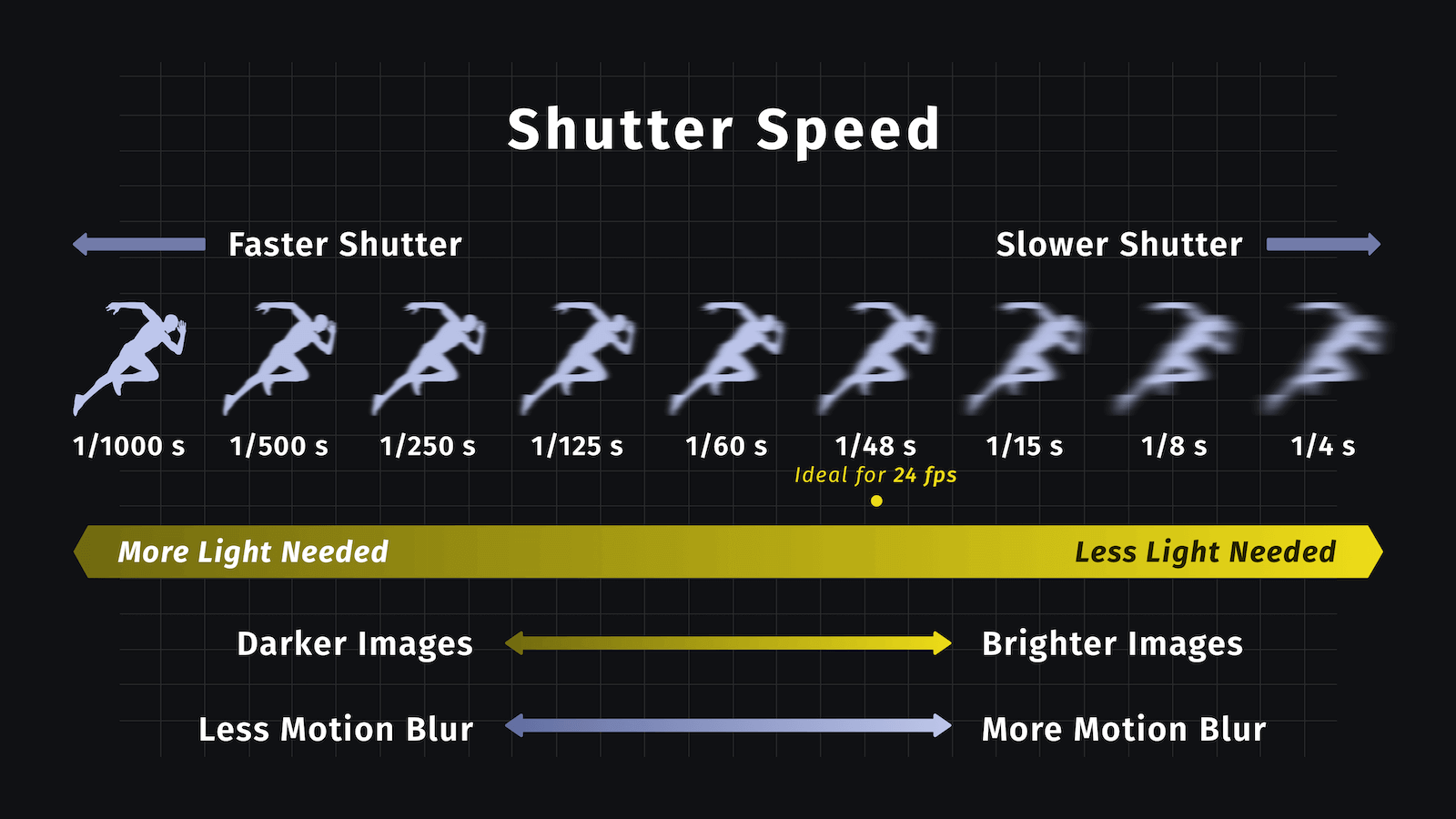
Shutter speed guide showing different speeds and their effects. Image: StudioBinder
Key Principles and Terminology
- Exposure Time: Measured in seconds or fractions of a second (e.g., 1/125, 1/60, 1")
- Motion Blur: The visual effect of movement during exposure
- Camera Shake: Unintentional blur caused by camera movement during exposure
- Reciprocity: The relationship between aperture and shutter speed for equivalent exposure
- Reciprocity Failure: The phenomenon where film responds differently during very long exposures
- Bulb Mode: A shutter setting allowing for exposures longer than the camera's preset times
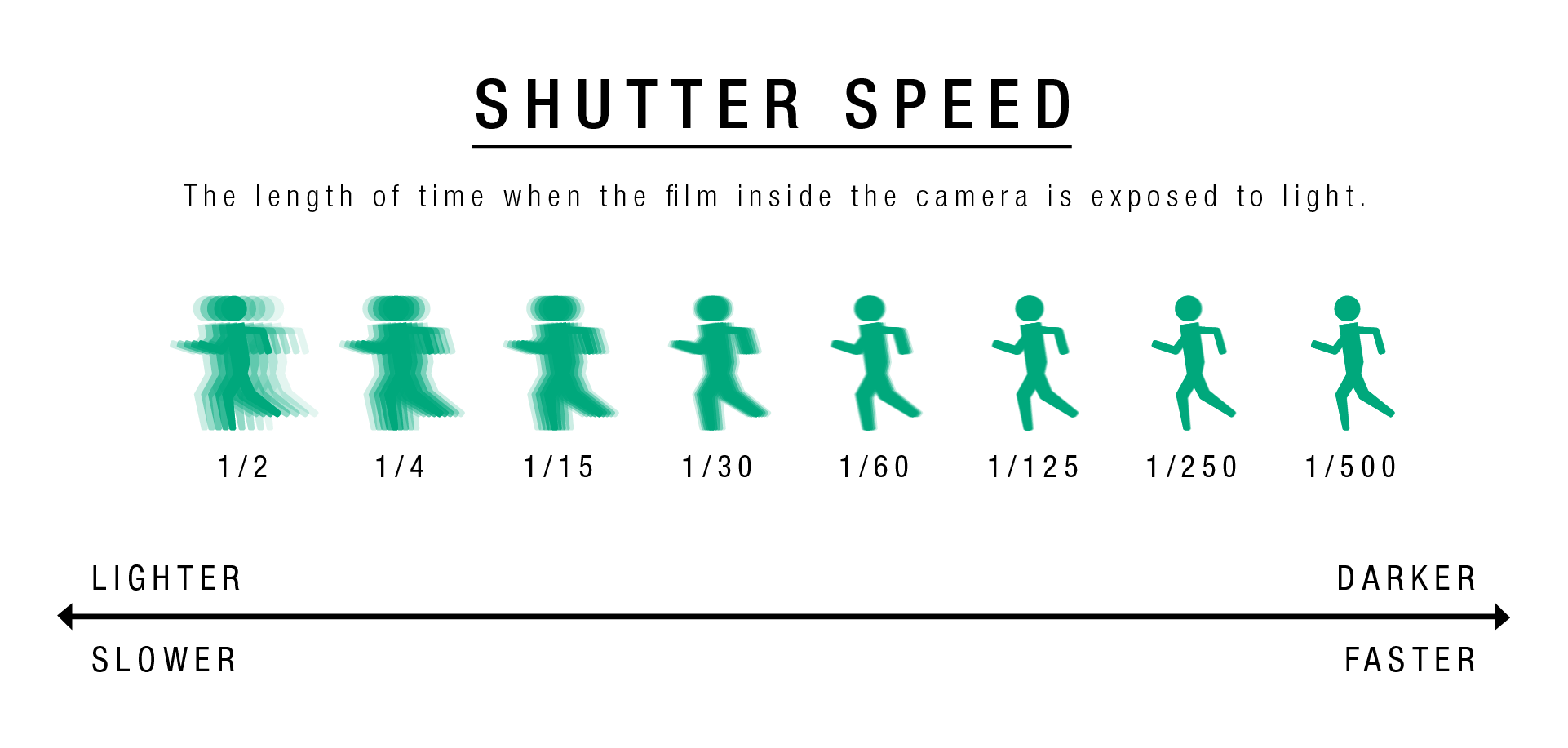
Infographic showing shutter speed effects on motion. Image: I Shoot Fujifilm
Understanding Shutter Speed
How Shutter Speed is Measured
Shutter speeds are typically expressed as fractions of a second (e.g., 1/500, 1/250, 1/125, 1/60, 1/30, 1/15) or in whole seconds for longer exposures (1", 2", 4", etc.). Most film cameras have mechanical shutters with discrete speed settings that progress in halves or doubles, where each step represents a doubling or halving of the exposure time.
Common Shutter Speed Settings on Film Cameras
Traditional film cameras often feature these standard shutter speeds:
- 1/1000 (very fast, high-end cameras)
- 1/500 (fast action)
- 1/250 (general purpose)
- 1/125 (general purpose)
- 1/60 (general purpose, sync speed for many flashes)
- 1/30 (slow, may show motion blur)
- 1/15, 1/8, 1/4, 1/2 (very slow, requires tripod)
- 1", B (Bulb), T (Time) (for long exposures)
The Exposure Triangle: Shutter Speed, Aperture, and ISO
Shutter speed works in conjunction with aperture and ISO to determine the exposure of your image. If you change one element, you typically need to adjust at least one other element to maintain the same exposure:
- Faster shutter speed → Wider aperture (smaller f-number) or higher ISO
- Slower shutter speed → Narrower aperture (larger f-number) or lower ISO
In film photography, since ISO is fixed for an entire roll, your primary adjustments will be between shutter speed and aperture.
Creative Effects with Shutter Speed
Freezing Motion
Fast shutter speeds (1/250 second or faster) can freeze motion, capturing sharp images of moving subjects. This is essential for sports, wildlife, and action photography. The exact speed needed depends on the speed of the subject and its distance from the camera.
Showing Motion
Slower shutter speeds (1/60 second or slower) allow motion to be recorded as blur, which can create a sense of movement and dynamism. This technique is particularly effective for:
- Flowing water (waterfalls, rivers, ocean waves)
- Moving vehicles with light trails
- People moving through a space
- Sports photography with intentional motion blur
Panning
Panning involves using a moderately slow shutter speed (typically 1/15 to 1/60 second) while following a moving subject with your camera. When done correctly, the subject remains relatively sharp while the background blurs horizontally, emphasizing the sense of speed and movement.
Long Exposures
Very slow shutter speeds (1 second to several minutes) can create dramatic effects:
- Smoothing water to a misty appearance
- Capturing star trails in night photography
- Creating light paintings
- Making moving subjects disappear from a scene
Reciprocity Failure
Reciprocity failure is a phenomenon unique to film photography that occurs during very long exposures. As exposure times extend beyond about 1 second, film becomes progressively less sensitive to light than would be expected by simply calculating exposure.
For example, if your meter indicates a 4-second exposure is needed, the actual required exposure might be 6 or 8 seconds, depending on the film. Each film type has different reciprocity characteristics:
- Some modern films (like Kodak Portra) have improved reciprocity characteristics
- Black and white films generally have less severe reciprocity failure than color films
- With color films, reciprocity failure can also cause color shifts
When planning long exposures, consult the film manufacturer's data sheets for reciprocity correction factors, or use the general rule of doubling exposure time for exposures between 1-10 seconds, and quadrupling for exposures between 10-100 seconds.
Practical Tips for Beginners
- Follow the "1/focal length" rule to avoid camera shake (e.g., use at least 1/50s with a 50mm lens)
- Use a tripod for shutter speeds slower than 1/60s
- Consider a cable release for long exposures to prevent camera movement
- Bracket exposures when in doubt about the correct shutter speed
- Practice panning techniques to capture moving subjects
- Learn your camera's mechanical limitations (some older cameras may not have very fast shutter speeds)
- Test your camera's actual shutter speeds, as older mechanisms may be inaccurate
Common Mistakes to Avoid
- Using too slow a shutter speed for handheld shooting
- Forgetting to adjust shutter speed when lighting conditions change
- Not accounting for reciprocity failure during long exposures
- Overlooking the creative potential of intentional motion blur
- Using inappropriate shutter speeds for the subject matter (e.g., too slow for fast action)
- Neglecting to use a cable release or self-timer for long exposures
Examples and Case Studies
- Freezing Motion: Fast shutter speeds (1/500s or faster) to capture sports or wildlife
- Conveying Movement: Slow shutter speeds (1/15s or slower) to blur moving water or traffic
- Low Light Photography: Long exposures with tripod for night scenes
- Panning Technique: Following a moving subject with a slower shutter speed (1/15s - 1/60s)
- Bulb Mode Application: Creating star trails or light painting with multi-minute exposures
Continue Learning
Now that you understand shutter speed in film photography, you might want to explore:
- ISO and Film Sensitivity - Learn how ISO works with shutter speed for proper exposure
- Film Types - Discover how different films respond to various shutter speeds
- Test Your Knowledge - Take a quiz on shutter speed concepts
- Practice with Flashcards - Reinforce your learning with flashcards