Film Types and Their Characteristics
Introduction
Film types vary widely in their characteristics, offering photographers different aesthetic qualities, color rendition, contrast, and grain structures. Understanding these differences helps photographers select the appropriate film for their creative vision and shooting conditions. Unlike digital, where you can change settings between shots, film choice commits you to certain characteristics for an entire roll.
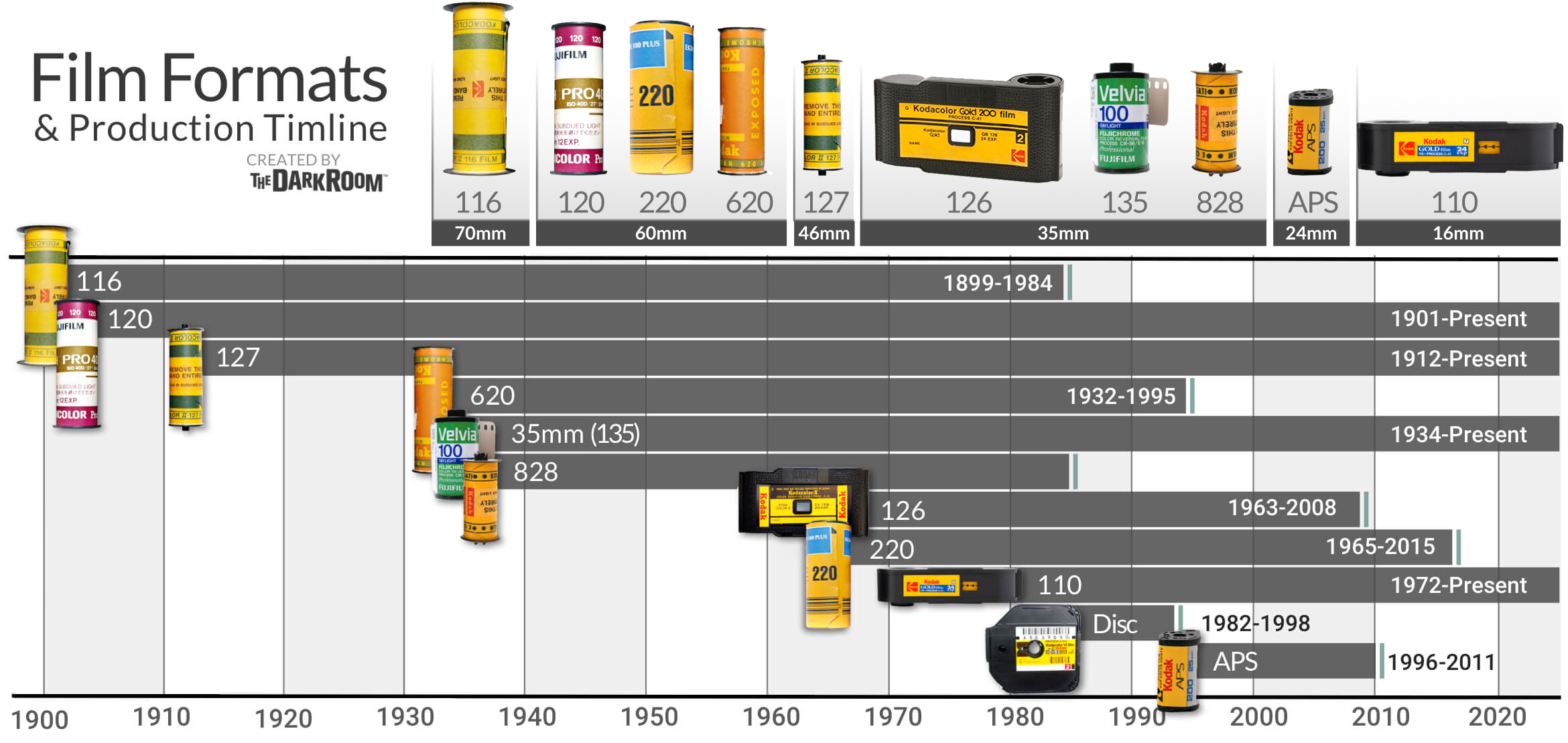
Chart showing different film formats and their characteristics. Image: The Darkroom
Key Principles and Terminology
- Color Negative Film: Produces negatives that are printed to create positive images, offers good exposure latitude
- Black and White Film: Captures only luminance values, not color information
- Slide Film (Reversal Film): Creates positive transparencies directly, typically with higher contrast and saturation
- Film Format: Physical size of the film (35mm, 120/medium format, large format)
- Grain Structure: The pattern and size of silver halide crystals that form the image
- Color Rendition: How a film reproduces colors compared to the actual scene
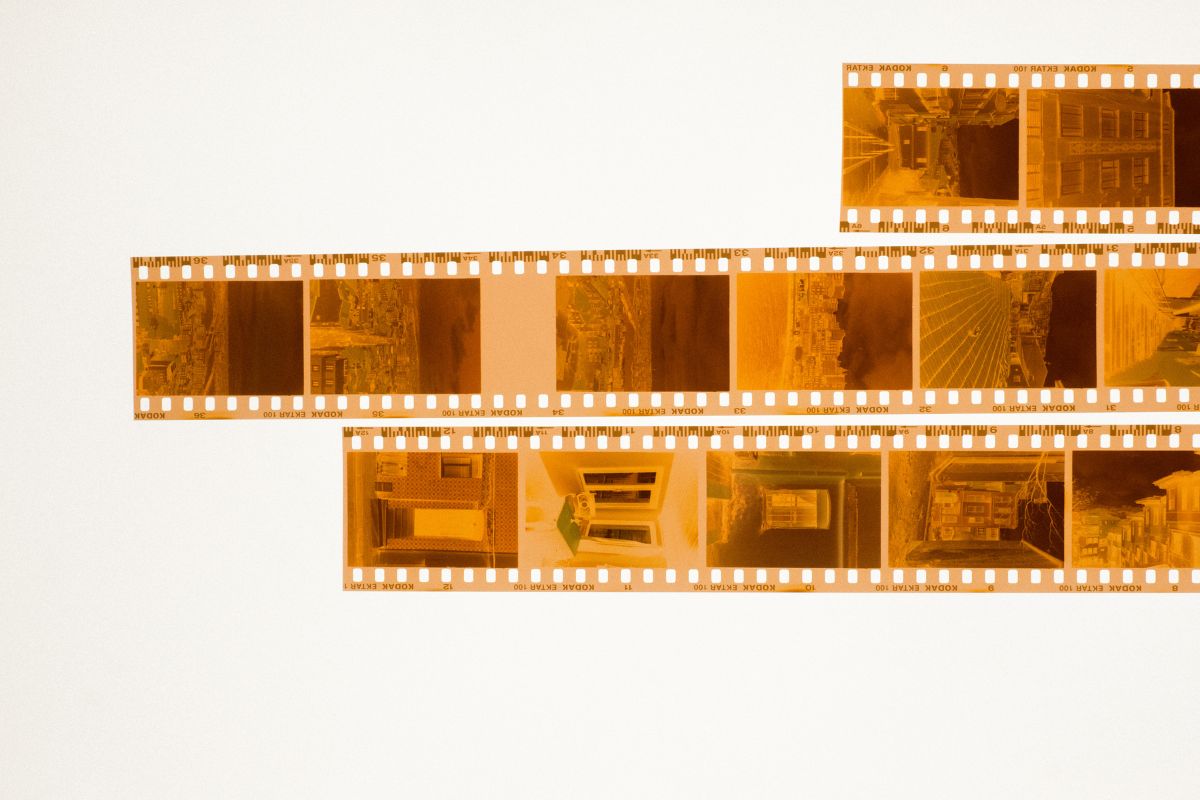
Guide to camera film types and formats. Image: Reformed Film Lab
Film Categories and Characteristics
Color Negative Film
Color negative film produces negatives that must be printed or scanned to create positive images. It's the most common type of film for general photography.
Characteristics:
- Good exposure latitude (handles overexposure well)
- Natural colors with moderate contrast
- Relatively forgiving of exposure errors
- Widely available and easy to process
Popular Types:
- Kodak Portra (160, 400, 800): Renowned for pleasing skin tones, ideal for portraits
- Kodak Gold/ColorPlus: Budget-friendly options with warm color rendition
- Fujifilm Superia: Slightly cooler tones, versatile for everyday photography
- Kodak Ektar 100: Vibrant colors, fine grain, excellent for landscapes
Black and White Film
Black and white film captures only luminance values, creating images with a timeless quality that emphasizes form, texture, and tonal relationships.
Characteristics:
- Focus on tone and texture rather than color
- Various contrast options available
- Can be processed at home with relatively simple chemicals
- Often has greater archival stability than color film
Popular Types:
- Ilford HP5+: Versatile ISO 400 film with moderate grain
- Kodak Tri-X: Classic documentary film with distinctive grain structure
- Ilford Delta 100: Fine grain, excellent for detailed work
- Ilford Pan F Plus 50: Ultra-fine grain, high contrast
Slide Film (Reversal Film)
Slide film produces positive transparencies directly, without the need for a separate printing process. These can be viewed with a light source or projector.
Characteristics:
- High saturation and contrast
- Sharp detail and fine grain
- Limited exposure latitude (requires precise exposure)
- True color representation when properly exposed
Popular Types:
- Fujichrome Velvia 50: Vibrant colors, high contrast, ideal for landscapes
- Fujichrome Provia 100F: More neutral colors, versatile for various subjects
- Kodak Ektachrome E100: Recently reintroduced, balanced color rendition
Specialty Films
Beyond the standard categories, there are specialty films designed for specific purposes or creative effects.
Types:
- Infrared Film: Sensitive to infrared light, creates surreal effects with dark skies and glowing foliage
- Lomography Films: Often with unique color shifts and experimental characteristics
- Cinema Films: Adapted motion picture films with distinctive looks
- Instant Films: For cameras like Polaroid and Instax, providing immediate physical prints
Film Formats
35mm Film
- Most common and accessible format
- 24mm × 36mm frame size
- Typically 24 or 36 exposures per roll
- Widest variety of film stocks available
- Compact cameras and equipment
Medium Format Film
- 120 or 220 film
- Various frame sizes depending on camera (6×4.5cm, 6×6cm, 6×7cm, 6×9cm)
- Higher resolution than 35mm due to larger negative size
- Fewer exposures per roll (typically 8-16 depending on format)
- Smoother tonal transitions and less apparent grain
Large Format Film
- Sheet film in sizes like 4×5", 5×7", or 8×10"
- Highest possible image quality and resolution
- Individual sheets exposed one at a time
- Allows for camera movements (tilt, shift, swing, rise/fall)
- Requires more elaborate equipment and setup
Choosing the Right Film
Considerations for Film Selection
- Subject Matter: Different films excel at different subjects (portraits, landscapes, street, etc.)
- Lighting Conditions: Available light will influence your choice of film speed (ISO)
- Aesthetic Goals: Consider the look you want (vibrant colors, muted tones, high contrast, etc.)
- Processing Availability: Some films require specialized processing
- Budget: Film prices vary significantly, especially for specialty films
Film Recommendations by Subject
- Portraits: Kodak Portra 400, Fujifilm Pro 400H, Ilford Delta 100 (B&W)
- Landscapes: Kodak Ektar 100, Fujichrome Velvia 50, Ilford FP4 Plus (B&W)
- Street Photography: Kodak Tri-X 400, Ilford HP5+, Kodak Gold 200
- Low Light/Night: Kodak Portra 800, Ilford Delta 3200, CineStill 800T
- Everyday Snapshots: Kodak ColorPlus 200, Fujifilm Superia X-Tra 400
Practical Tips for Beginners
- Start with forgiving films like Kodak Gold or Ilford HP5+
- Store film properly (cool, dry place) before and after shooting
- Pay attention to expiration dates, especially for slide film
- Test different films to find those that match your aesthetic preferences
- Consider the lighting conditions when selecting film speed
- Keep notes about which films you use and in what conditions
Common Mistakes to Avoid
- Storing film improperly (heat and humidity degrade film)
- Using expired film without adjusting exposure
- Choosing slide film for high-contrast scenes
- Not considering the film's color characteristics for the subject
- Using specialty films without understanding their quirks
- Expecting consistent results from expired or cross-processed film
Examples and Case Studies
- Portrait Photography: Kodak Portra 400 for its flattering skin tones
- Landscape Photography: Fujichrome Velvia 50 for vibrant colors and fine detail
- Street Photography: Ilford HP5+ or Kodak Tri-X for versatility and distinctive grain
- Experimental Photography: Lomography Purple for surreal color shifts
- Architecture: Kodak Ektar 100 or T-Max 100 for fine detail and minimal grain
Continue Learning
Now that you understand different film types and their characteristics, you might want to explore:
- Developing Film Process - Learn how to process your exposed film
- Nature Photography Techniques - Apply your film knowledge to nature photography
- Test Your Knowledge - Take a quiz on film types
- Practice with Flashcards - Reinforce your learning with flashcards