ISO and Film Sensitivity
Introduction
ISO (International Organization for Standardization) in film photography refers to the film's sensitivity to light. Unlike digital photography where ISO can be changed between shots, film ISO is fixed for an entire roll. Understanding film sensitivity is fundamental to achieving proper exposure and controlling image characteristics like grain and contrast.
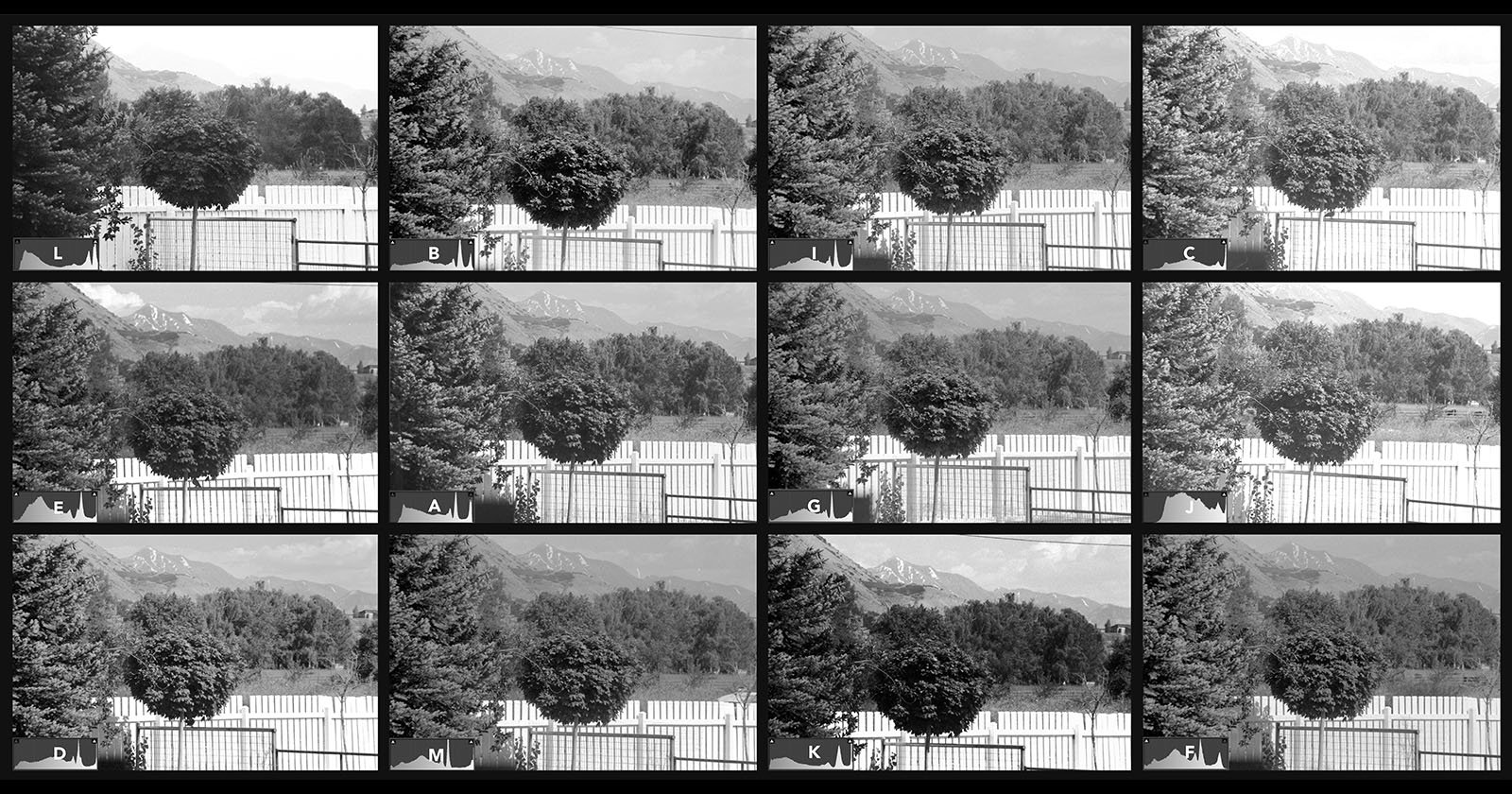
Comparison of different ISO black and white films. Image: PetaPixel
Key Principles and Terminology
- Film Speed: Measured in ISO numbers (100, 200, 400, etc.)
- Sensitivity: Higher ISO numbers indicate greater sensitivity to light
- Grain: The visible texture in film images, more pronounced with higher ISO films
- Exposure Latitude: The film's ability to retain detail in highlights and shadows
- Pushing: Deliberately underexposing film and extending development time to increase effective ISO
- Pulling: Overexposing film and reducing development time to decrease effective ISO
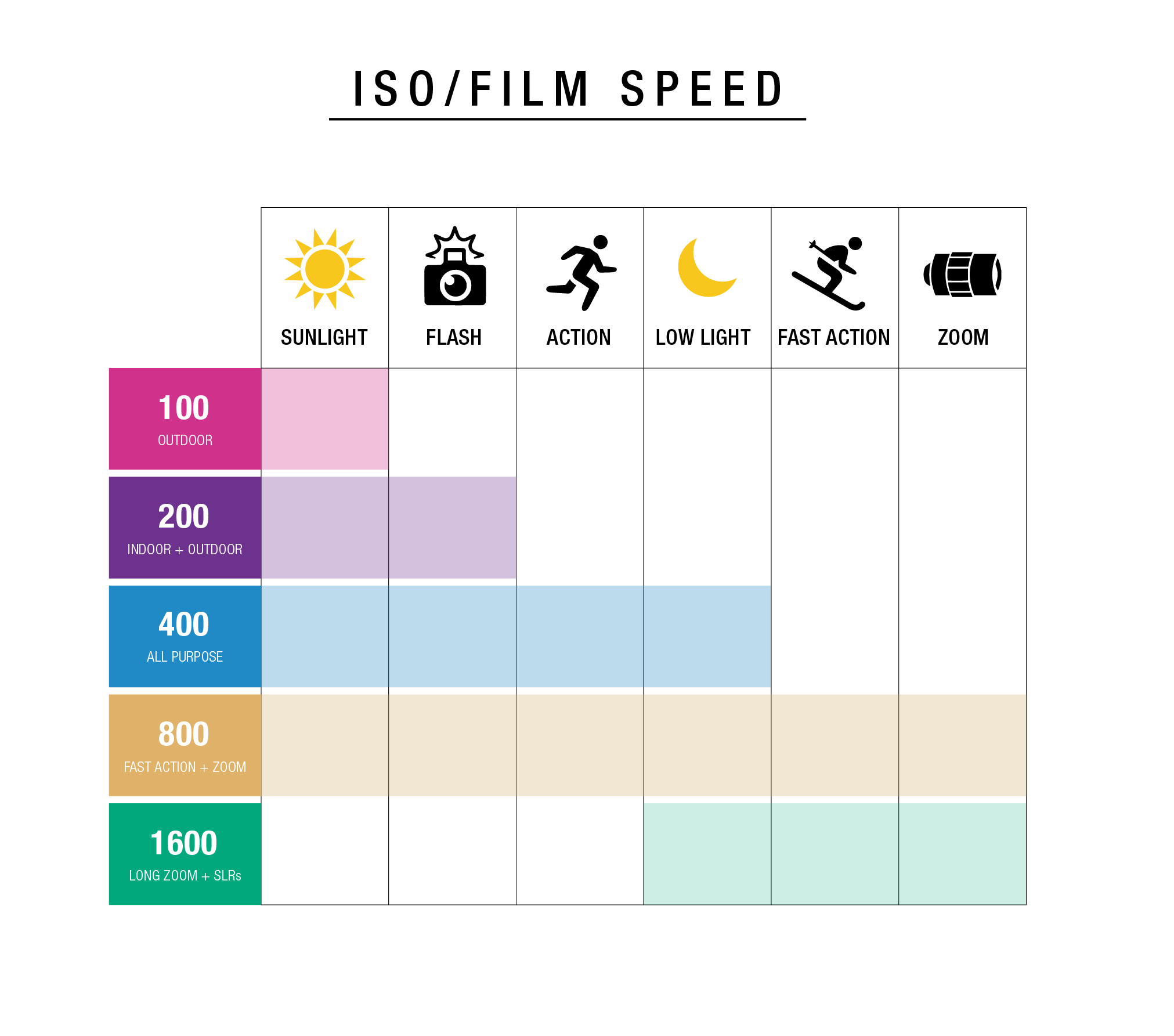
Infographic explaining ISO, aperture, and shutter speed relationships. Image: I Shoot Fujifilm
Understanding Film ISO
What ISO Numbers Mean
ISO numbers indicate how sensitive film is to light. Common ISO ratings include 100, 200, 400, 800, 1600, and 3200. Each doubling of the ISO number represents a doubling of the film's sensitivity to light. For example, ISO 400 film is twice as sensitive to light as ISO 200 film, requiring half the exposure time under the same conditions.
ISO and Image Quality
There's an inherent trade-off between sensitivity and image quality. Lower ISO films (50-200) typically produce finer grain, better resolution, and richer colors or tones, but require more light. Higher ISO films (400-3200) can be used in lower light conditions but generally produce more visible grain and sometimes less vibrant colors.
The Relationship Between ISO, Aperture, and Shutter Speed
ISO is one of the three components of the exposure triangle, along with aperture and shutter speed. In film photography, since ISO is fixed for an entire roll, you must adjust aperture and shutter speed to achieve proper exposure. For example, if you're using ISO 100 film in dim light, you'll need either a wider aperture (smaller f-number) or a slower shutter speed compared to using ISO 400 film.
Choosing the Right Film ISO
ISO 50-100: Low Sensitivity Films
- Best for: Bright daylight, studio work with controlled lighting
- Advantages: Finest grain, highest resolution, richest colors/tones
- Limitations: Requires more light, slower shutter speeds or wider apertures
- Examples: Fujifilm Velvia 50, Ilford Pan F Plus 50, Kodak Ektar 100
ISO 200-400: Medium Sensitivity Films
- Best for: General purpose photography, mixed lighting conditions
- Advantages: Good balance between image quality and versatility
- Limitations: Moderate grain becomes visible in larger prints
- Examples: Kodak Portra 400, Ilford HP5 Plus 400, Kodak Tri-X 400
ISO 800-3200: High Sensitivity Films
- Best for: Low light conditions, indoor photography without flash, action/sports
- Advantages: Ability to shoot in challenging lighting conditions
- Limitations: More pronounced grain, potentially reduced color saturation
- Examples: Kodak Portra 800, Ilford Delta 3200, Kodak T-Max P3200
Pushing and Pulling Film
Pushing Film
Pushing is a technique where you rate a film at a higher ISO than its box speed and extend the development time to compensate. For example, you might shoot ISO 400 film as if it were ISO 800 or 1600, then develop it for longer than normal.
- When to push: Low light conditions when you need faster shutter speeds
- Effects: Increased contrast, more pronounced grain, potentially blocked shadows
- Common push ratings: One stop (e.g., 400 to 800) or two stops (e.g., 400 to 1600)
Pulling Film
Pulling is the opposite of pushing—rating a film at a lower ISO than its box speed and reducing development time. For example, shooting ISO 400 film as if it were ISO 200, then developing it for less time than normal.
- When to pull: Very bright conditions or when you want to reduce contrast
- Effects: Decreased contrast, finer grain, potentially flat highlights
- Common pull ratings: One stop (e.g., 400 to 200)
Note: Not all films respond well to pushing or pulling. Black and white films generally handle these techniques better than color films. Always consult development charts specific to your film and developer combination.
Practical Tips for Beginners
- Match film ISO to your shooting conditions:
- ISO 100-200: Bright daylight, fine detail
- ISO 400: Versatile for mixed lighting conditions
- ISO 800+: Low light situations
- Carry multiple cameras loaded with different ISO films for varied conditions
- Consider the aesthetic qualities of grain when selecting film speed
- Learn to meter accurately to get the most from your chosen film
- Start with more forgiving films (like ISO 400) while learning exposure
- Label your camera with the loaded film's ISO as a reminder
Common Mistakes to Avoid
- Using high ISO film in bright conditions, resulting in overexposure
- Choosing low ISO film for low light without a tripod
- Forgetting which ISO film is loaded in your camera
- Not adjusting exposure settings when changing between films of different speeds
- Expecting digital-like results from high ISO films
- Ignoring the relationship between ISO, aperture, and shutter speed
Examples and Case Studies
- Landscape Photography: Low ISO films (50-100) for maximum detail and minimal grain
- Street Photography: Medium ISO films (400) for versatility and quicker shooting
- Concert Photography: High ISO films (800-3200) for low-light performance
- Pushing Film Example: Rating ISO 400 film at 1600 for night photography
- Film Comparison: Visual examples showing the same scene shot with different ISO films
Continue Learning
Now that you understand ISO and film sensitivity, you might want to explore:
- Shutter Speed - Learn how shutter speed works with ISO for proper exposure
- Film Types - Discover different film stocks and their characteristics
- Test Your Knowledge - Take a quiz on ISO and film sensitivity
- Practice with Flashcards - Reinforce your learning with flashcards