Composition Techniques in Film Photography
Introduction
Composition in film photography refers to the deliberate arrangement of visual elements within the frame. With film's limited exposures and inability to preview results, strong compositional skills become even more crucial. Good composition guides the viewer's eye, creates visual interest, and enhances the photograph's storytelling power.
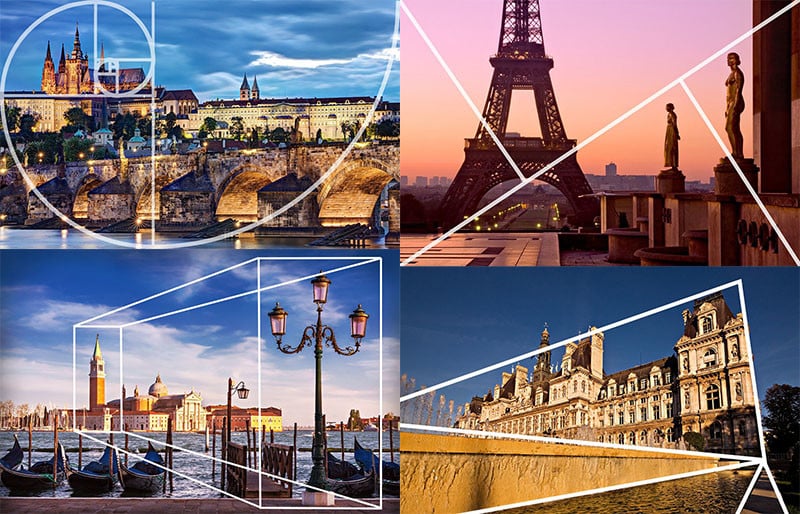
Composition techniques illustrated in photography. Image: PetaPixel
Key Principles and Terminology
- Rule of Thirds: Dividing the frame into a 3×3 grid and placing key elements along these lines or at their intersections
- Leading Lines: Linear elements that guide the viewer's eye through the image
- Framing: Using elements within the scene to create a natural frame around the subject
- Balance: Distribution of visual weight within the image (symmetrical or asymmetrical)
- Negative Space: Empty areas that provide breathing room and emphasize the subject
- Depth: Creating a sense of three-dimensionality through foreground, middle ground, and background elements
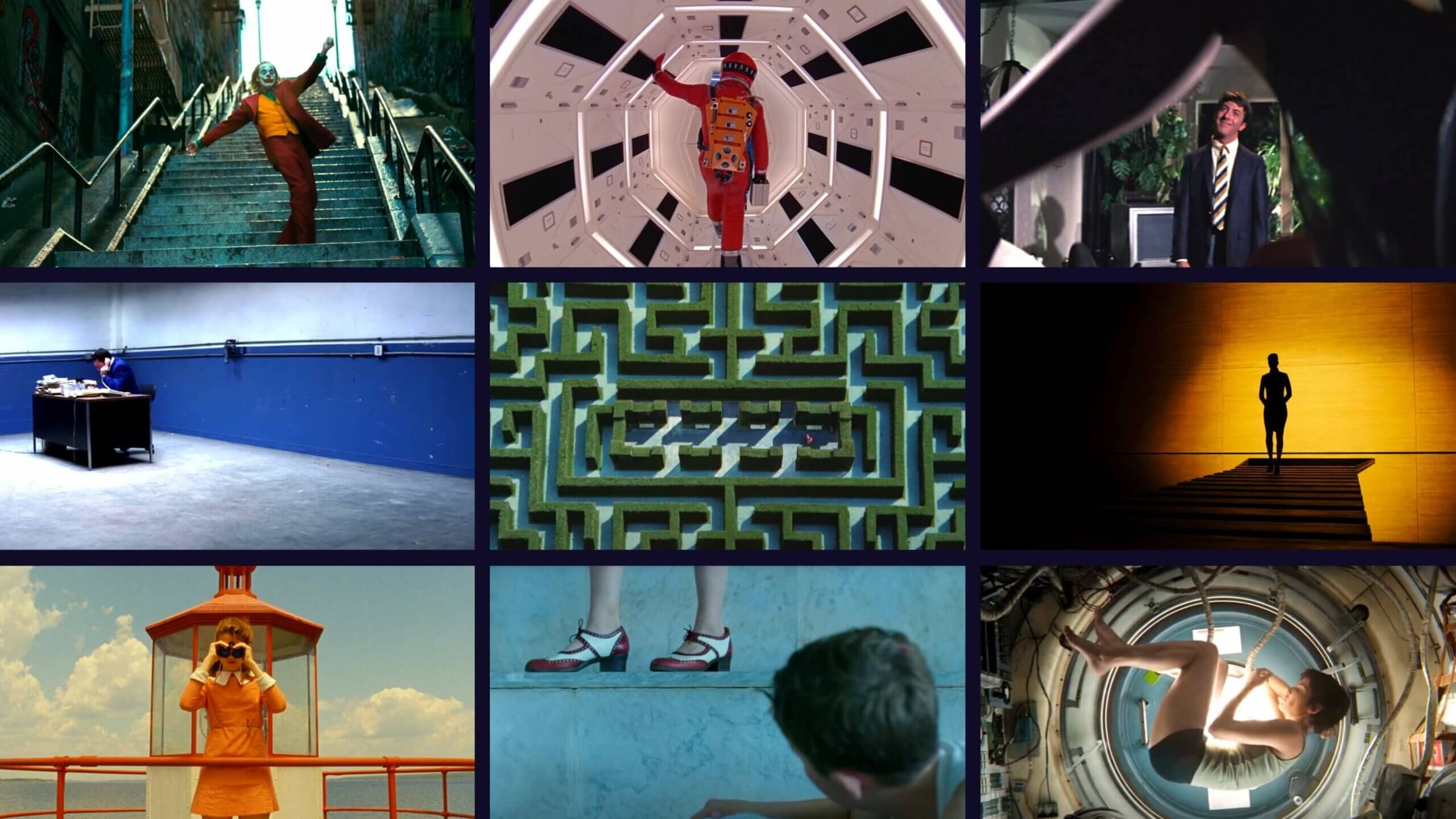
Rules of shot composition in film photography. Image: StudioBinder
Essential Composition Techniques
Rule of Thirds
The rule of thirds divides your frame into nine equal parts using two horizontal and two vertical lines. Placing key elements along these lines or at their intersections creates a more balanced and engaging composition than centering the subject. This technique works particularly well for landscapes (placing the horizon on the upper or lower third) and portraits (positioning eyes along the upper third).
Leading Lines
Leading lines are natural or created lines within the scene that guide the viewer's eye toward the main subject or through the frame. These can be roads, rivers, fences, or architectural elements. In film photography, where you can't immediately check results, identifying strong leading lines before shooting helps create more compelling compositions.
Framing
Framing uses elements within the scene to create a natural border around your subject. This might be tree branches, doorways, windows, or archways. Framing adds depth to your image and draws attention to your subject. In black and white film photography, the contrast between the frame and the subject can be particularly striking.
Balance
Balance refers to the visual weight distribution in your image. Symmetrical balance places elements of equal weight on either side of the frame, creating a formal, stable feeling. Asymmetrical balance uses different elements that complement each other despite their differences, often creating more dynamic compositions. Film photographers must visualize this balance before shooting.
Negative Space
Negative space is the empty area around your subject. Using negative space effectively can create powerful, minimalist compositions that emphasize your subject. In film photography, particularly with high-contrast black and white film, the interplay between subject and negative space can create striking images.
Practical Tips for Beginners
- Study the viewfinder carefully before pressing the shutter
- Consider the edges of the frame as much as the center
- Look for natural frames within the environment
- Use leading lines to create visual flow
- Experiment with different perspectives and angles
- Pay attention to the background and eliminate distractions
- Practice pre-visualization since you can't immediately see results
Common Mistakes to Avoid
- Placing the subject directly in the center of every frame
- Cluttered or distracting backgrounds
- Cutting off important parts of the subject
- Ignoring the edges of the frame
- Including too many elements without a clear focal point
- Failing to consider how the eye will move through the image
- Inconsistent horizon lines
Examples and Case Studies
- Landscape Example: Using foreground elements to create depth in a mountain scene
- Portrait Example: Applying the rule of thirds for more engaging portraits
- Street Photography Example: Using architectural elements as natural frames
- Abstract Example: Creating balance through symmetry and patterns
- Documentary Example: Using composition to tell a story without words
Ansel Adams' Approach to Composition
Ansel Adams, the master of landscape photography, approached composition with meticulous attention to detail. He believed in "visualization"—the ability to see the final print in his mind before taking the photograph. For Adams, composition wasn't just about arranging elements but about expressing emotional and spiritual qualities of the landscape.
Adams often used foreground elements to create depth, carefully positioned horizon lines to emphasize either sky or land, and waited patiently for the perfect light to reveal textures and forms. His compositions typically featured strong visual anchors and a clear path for the eye to travel through the image.
When studying Adams' work, notice how he balances dramatic elements with quieter areas, creating images with both impact and subtlety. His approach reminds us that effective composition in film photography requires both technical understanding and artistic vision.
Continue Learning
Now that you understand composition techniques for film photography, you might want to explore:
- Lenses for Film Cameras - Learn how lens choice affects composition
- ISO and Film Sensitivity - Understand how film choice impacts your compositional options
- Test Your Knowledge - Take a quiz on composition techniques
- Practice with Flashcards - Reinforce your learning with flashcards